Sunday, April 15, 2012
Rasquera: a Catalan village wants to allow marihuana plantation to end crisis
The English coverage ("Where there's smoke, there's ire") comes from El País daily here.

April 15, 2012: Titanic - and other anniversaries
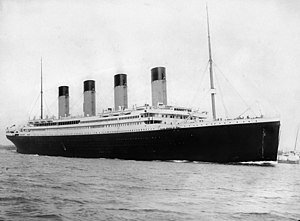
Several cruise ships have set out to take the same route as did the Titanic 100 years ago, and memorial services were held at the spot were it sank and in Halifax, Canada, were a lot of the corpses turned up and were buried shortly after the catastrophe (on the cruises: The Chronicle Herald offers this article, and a special section on the anniversary [whose aethetics is very close to the movie by James Cameron (the Wikipedia lists 26 movies on the event)]; The Guardian has this article; on Halifax, cf. the article by the Winnipeg Free Press here). The Spanish daily El País has this article (in English) on the Spaniards among the 1,517 victims.
The Washington Post offers an interesting blog entry on the oversaturated media coverage of this anniversary, here.
Another "catastrophic event" today 100 years ago was the birth of Kim Il-Sung (the Wikipedia article here), though this became apparent only a few decades later - and we do not believe that history is made by "great men" alone...
An aside to an event that has had little media coverage (especially after the king's hunting accident, cf. BBC coverage here): on April 14, 1962, i.e. 50 years ago, the future King Juan Carlos I was married to Greek princess Sofia. (Update: I learned that it was May 14: no wonder, there were no festivities nor media coverage)
To end this post with a positive note: the day the Titanic hit the iceberg (April 14, 1912) also saw the birth of Robert Doisneau, to become one of the greatest photographers of the 20th century.
Sunday, April 8, 2012
Catalonia: prostitution making headlines of the NYT
An article on prostitution and trafficking of women in La Jonquera, the main frontier town between Catalonia and France, is among the most widely read of the New York Times these days. Whereas the rest of the economy is in shambles, this "business" is flourishing, with a lot of "customers" coming over from France.
The article is thorough and shows the contradictions of Spain's policy on prostitution: the act in itself is not illegal, but pimping is. Mayors do not want to have it on their streets, but they are happy to collect taxes from certain "hotels". Trafficking with women is illegal but there are very few convictions. Even respectable newspapers have two to four pages full of small adds for "sexual services" every day.
"In Spain, Women Enslaved by a Boom in Brothel Tourism" by Suzanne Daley, published April 6, is here, the accompanying pictures here.
The article is thorough and shows the contradictions of Spain's policy on prostitution: the act in itself is not illegal, but pimping is. Mayors do not want to have it on their streets, but they are happy to collect taxes from certain "hotels". Trafficking with women is illegal but there are very few convictions. Even respectable newspapers have two to four pages full of small adds for "sexual services" every day.
"In Spain, Women Enslaved by a Boom in Brothel Tourism" by Suzanne Daley, published April 6, is here, the accompanying pictures here.
Tuesday, April 3, 2012
Authors from Catalonia: Enrique Vila-Matas
Enrique Vila-Matas is from Barcelona, lives there, and on March 31 he celebrated his 64th birthday, but he is not a Catalan author as he writes in Spanish. His official website is here; the part in English and on translations of his works into English here. Amazon.com lists four of his works in English, the last of these still to be released. Interestingly, they come cheaper in their translated version then in their Spanish original...
Bartleby&Co. here and an interesting overview of reviews of this novel here
Montano's Malady here
Never Any End to Paris here and an interview with this author on this book from The Paris Review here (and links to reviews in English and German here)
Dublinesque here, to be released in English on June 7, 2012
Bartleby&Co. here and an interesting overview of reviews of this novel here
Montano's Malady here
Never Any End to Paris here and an interview with this author on this book from The Paris Review here (and links to reviews in English and German here)
Dublinesque here, to be released in English on June 7, 2012
Québec Book Fair: Catalan literature as guest of honor (April 11-15, 2012)

Catalan nationalists often look enviously at Québécois nationalists who already managed to hold referenda on independence in the past - though they like to overlook that these always ended in favour of the union with the rest of Canada.
Saturday, March 31, 2012
Spanish politics: finally a budget for 2012
Yesterday the central government in Madrid revealed its budget plans for this year. It's sad to see that they will virtually give up on development aid to the world's poorest. The Wall Street Journal reports extensively here; it seems that it is still way to early to know if Spain will overcome its by now already 5-year-old crisis - or if it will need an official rescue like that of Ireland and Greece.
update 03.04.2012: the WSJ offers an interview with Spain's finance minister here.
update 03.04.2012: the WSJ offers an interview with Spain's finance minister here.
Sunday, March 11, 2012
Jaume Cabré, an interview [exercises in translation]
This is an unauthorized translation of an interview of the writer Jaume Cabré (JC) by Víctor-M. Amela (VMA), published on the back-cover of La Vanguardia newspaper on March 7, 2012.
Jaume Cabré, writer. I am 64 years old. I was born in Barcelona and live in Matadepera. I am married to Margarida and we have two children, Martí (37) and Clara (31), and one grand-child. I am a Catalan independent. I am agnostic but it hurts me that they use God to justify violence. Hell is that the devil does not exist.
"Educate is to teach the young person to be totally alone by him-/herself"
VMA: Why do you write?
JC: I wanted to be a musician: I play the violin, but I am not good enough...
VMA: And why musician?
JC: When I was little, at home we had a piano that my parents played with four hands... I also wanted to be a firefighter, Pope...
VMA: The Pope of Rome?
JC: A gentleman in disguise who was treated so well by everybody... I was enchanted!
VMA: Afterwards you wrote about Pope Luna...
JC: That there were different popes and that all considered the others heretics fascinated me. The one who wins declares all the others anti-popes and writes the History! What's the truth?
VMA: So, you write because you do not play the violin?
JC: Art hides some frustration, a lack that you alleviate by playing the lute, writing...
VMA: The artistic drive as a therapy.
JC: If you feel that you cannot live without following this drive, you have to follow it!
VMA: "If you see yourself able not to write, then don't write," said Borges' father to him.
JC: I haven't been able to live without writing! For some years I was a secondary school teacher, came home, corrected exams, spent time with my children... and in the early morning hours, I wrote! It was hard, but the teaching was harder: winning over the students, have them participate, excite them...
VMA: What would you do to improve the education?
JC: The parents keep themselves totally away, they delegate all to the school. If a father complains that his son doesn't read, ask him: "And you, do you read?".
VMA: To broaden responsibilities, I see.
JC: We live in a society that gives priority to a TV program on the question of a footballer's depilation over another about the History of Europe.
VMA: You find this worrying?
JC: I am discourage by the superficiality that you note in the incapacity to be alone by ourselves. Educating means teaching the young to be alone by him-/herself.
VMA: Socializing culture maybe banalizes it.
JC: I believe that it is possible to extend and democratize culture without necessarily degrading it or taking down the bar. What I am really worried about is the contempt for the study of the Humanities...
VMA: Why?
JC: If we let us carry away by an extreme utilitarianism, we will give up studying Greek and Latin, then Geography, then Philosophy, and finally History... All that makes us "cultured" and able to judge, structured persons! Just the subjects that everybody should study..., and later on, let them enter deeper into whatever subject they like.
VMA: I sign that!
JC: It all starts with being badly educated..., and then you abuse your partner..., and then you use your fist, and like this we arrive at Auschwitz.
VMA: Do you not dramatize a little here?
JC: No, the drama is that the bad resides in you. Hell consists of the fact that the devil does not exist.
VMA: What is your idea of the bad?
JC: To pretend to do good seems very pretentious to me... Trying to not to do bad is already a lot! Look at the ecological footprint..
VMA: What does it have?
JC: Even the person that does not want to contaminate at all ends up contaminating a little. We are no angels! And a grain of sand ends up stopping a big machine: i starts with a bad gesture and ...
VMA: For example?
JC: To call a Catalan "Polish" is a beginning, comparable to the Nazis that called the Jew "rat".
VMA: Do we have to learn pluralism?
JC: We have to learn that Europe's common language is not English: it's translation! Umberto Eco says this. The European reality is plurilingual and this is a treasure!
VMA: You write in Catalan?
JC: We do not live in a country, we live in a language. I live in the Catalan language. A language that was prohibited: that is a fact that surprises a lot when you explain it around the world...
VMA: In how many languages have your works already been translated?
JC: Into twenty-something, including Spanish! I am very satisfied because of the reluctance of Spanish readers towards us, authors who write in Catalan.
VMA: Why is that?
JC: The Catalans read authors who write in Spanish but it does not happen vice-versa. And it hurts me. I heard in a restaurant in Spain a group of guests that did not want the Catalan wines for their provenance... and that hurts!
VMA: Your latest novel will be a bestseller. And what will you write next?
JC: It took me eight years to write I confess. Now... I have to wait.
VMA: Wait for what?
JC: That I am dominated again by this necessity to write something else.
VMA: And right now, how are you?
JC: Right now, this is not the case. But I suspect that something will arrive, something will arrive...
VMA: You also wrote serials and TV series.
JC: The first serial that was made in Spain, La granja [The farm], with Puyal... I worked very well, I earned money.
VMA: What advice would you give to those who want to write for TV?
JC: Visualize everything you write, describe gestures and looks, and write things that surprise yourself.
VMA: What's the secret of your novels?
JC: I have no idea! I only know that I put in my life, that I give my full dedication to writing. And the German critics say: "We have never seen this way of writing before".
VMA: You are read widely there, I understand.
JC: Yes, they have a lot of reading clubs, they read in school, they invite writers. I believe that if everybody read one book every year the world would be different!
In English Amazon.com offers only one work of Jaume Cabré, Winter Journey, a selection of short stories.
Jaume Cabré, writer. I am 64 years old. I was born in Barcelona and live in Matadepera. I am married to Margarida and we have two children, Martí (37) and Clara (31), and one grand-child. I am a Catalan independent. I am agnostic but it hurts me that they use God to justify violence. Hell is that the devil does not exist.
"Educate is to teach the young person to be totally alone by him-/herself"
VMA: Why do you write?
JC: I wanted to be a musician: I play the violin, but I am not good enough...
VMA: And why musician?
JC: When I was little, at home we had a piano that my parents played with four hands... I also wanted to be a firefighter, Pope...
VMA: The Pope of Rome?
JC: A gentleman in disguise who was treated so well by everybody... I was enchanted!
VMA: Afterwards you wrote about Pope Luna...
JC: That there were different popes and that all considered the others heretics fascinated me. The one who wins declares all the others anti-popes and writes the History! What's the truth?
VMA: So, you write because you do not play the violin?
JC: Art hides some frustration, a lack that you alleviate by playing the lute, writing...
VMA: The artistic drive as a therapy.
JC: If you feel that you cannot live without following this drive, you have to follow it!
VMA: "If you see yourself able not to write, then don't write," said Borges' father to him.
JC: I haven't been able to live without writing! For some years I was a secondary school teacher, came home, corrected exams, spent time with my children... and in the early morning hours, I wrote! It was hard, but the teaching was harder: winning over the students, have them participate, excite them...
VMA: What would you do to improve the education?
JC: The parents keep themselves totally away, they delegate all to the school. If a father complains that his son doesn't read, ask him: "And you, do you read?".
VMA: To broaden responsibilities, I see.
JC: We live in a society that gives priority to a TV program on the question of a footballer's depilation over another about the History of Europe.
VMA: You find this worrying?
JC: I am discourage by the superficiality that you note in the incapacity to be alone by ourselves. Educating means teaching the young to be alone by him-/herself.
VMA: Socializing culture maybe banalizes it.
JC: I believe that it is possible to extend and democratize culture without necessarily degrading it or taking down the bar. What I am really worried about is the contempt for the study of the Humanities...
VMA: Why?
JC: If we let us carry away by an extreme utilitarianism, we will give up studying Greek and Latin, then Geography, then Philosophy, and finally History... All that makes us "cultured" and able to judge, structured persons! Just the subjects that everybody should study..., and later on, let them enter deeper into whatever subject they like.
VMA: I sign that!
JC: It all starts with being badly educated..., and then you abuse your partner..., and then you use your fist, and like this we arrive at Auschwitz.
VMA: Do you not dramatize a little here?
JC: No, the drama is that the bad resides in you. Hell consists of the fact that the devil does not exist.
VMA: What is your idea of the bad?
JC: To pretend to do good seems very pretentious to me... Trying to not to do bad is already a lot! Look at the ecological footprint..
VMA: What does it have?
JC: Even the person that does not want to contaminate at all ends up contaminating a little. We are no angels! And a grain of sand ends up stopping a big machine: i starts with a bad gesture and ...
VMA: For example?
JC: To call a Catalan "Polish" is a beginning, comparable to the Nazis that called the Jew "rat".
VMA: Do we have to learn pluralism?
JC: We have to learn that Europe's common language is not English: it's translation! Umberto Eco says this. The European reality is plurilingual and this is a treasure!
VMA: You write in Catalan?
JC: We do not live in a country, we live in a language. I live in the Catalan language. A language that was prohibited: that is a fact that surprises a lot when you explain it around the world...
VMA: In how many languages have your works already been translated?
JC: Into twenty-something, including Spanish! I am very satisfied because of the reluctance of Spanish readers towards us, authors who write in Catalan.
VMA: Why is that?
JC: The Catalans read authors who write in Spanish but it does not happen vice-versa. And it hurts me. I heard in a restaurant in Spain a group of guests that did not want the Catalan wines for their provenance... and that hurts!
VMA: Your latest novel will be a bestseller. And what will you write next?
JC: It took me eight years to write I confess. Now... I have to wait.
VMA: Wait for what?
JC: That I am dominated again by this necessity to write something else.
VMA: And right now, how are you?
JC: Right now, this is not the case. But I suspect that something will arrive, something will arrive...
VMA: You also wrote serials and TV series.
JC: The first serial that was made in Spain, La granja [The farm], with Puyal... I worked very well, I earned money.
VMA: What advice would you give to those who want to write for TV?
JC: Visualize everything you write, describe gestures and looks, and write things that surprise yourself.
VMA: What's the secret of your novels?
JC: I have no idea! I only know that I put in my life, that I give my full dedication to writing. And the German critics say: "We have never seen this way of writing before".
VMA: You are read widely there, I understand.
JC: Yes, they have a lot of reading clubs, they read in school, they invite writers. I believe that if everybody read one book every year the world would be different!
"I confess"
Jaume Cabré is currently the Catalan author par excellence for reasons of prizes, number of readers, and international impact.
He receives me in the office where he writes, in a placid and sunny semi-detached house in front of a wooded mountain to talk about his latest book and a lot of other things. Cabré made his dream reality: to make a living of his fantasies, of what he writes. Being the author of TV and cinema scripts and novels such as Les veus del Pamano, Senyoria, L'ombra de l'eunuc and Fra Junoy o l'agonia dels sons, he now finds himself in literature's first line with Jo confesso (Proa) / Yo confieso (Destino), a great adventure that includes everything that good stories need to have and with European culture as background.
In English Amazon.com offers only one work of Jaume Cabré, Winter Journey, a selection of short stories.
Subscribe to:
Posts (Atom)